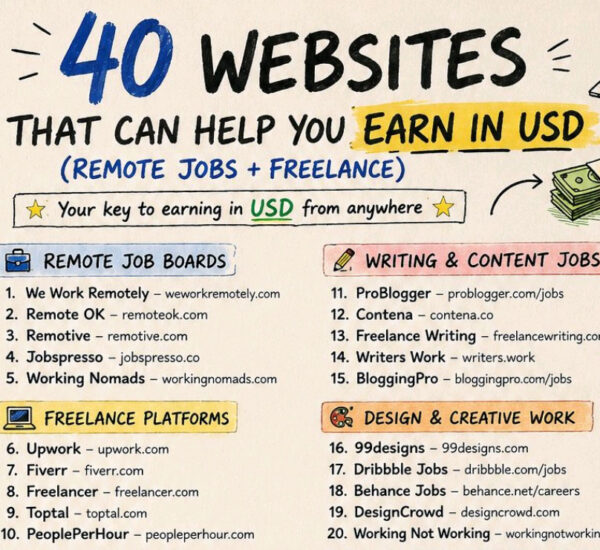
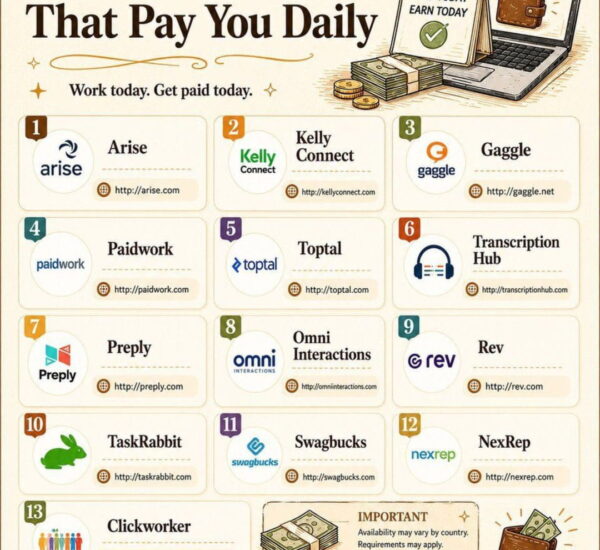
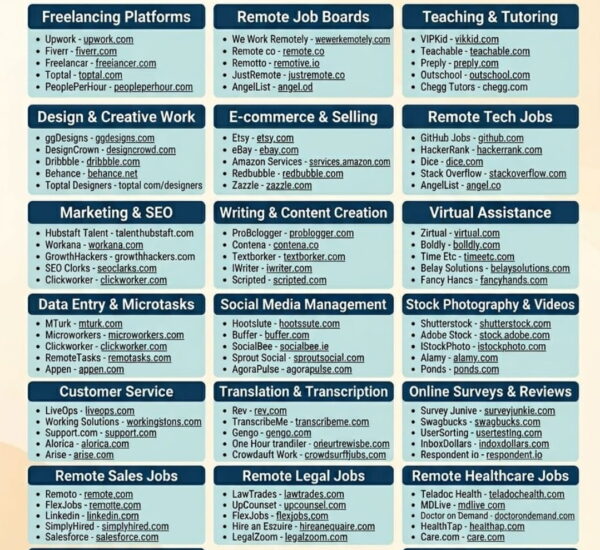
If you have been sending job applications for months and getting ignored, or if you are tired of commuting to a job that pays far less than you deserve, remote work is the answer. In 2026, there are more legitimate remote job opportunities available globally than at any point in history. Companies across the United States, United Kingdom, Canada, and Europe are actively hiring people from every corner of the world — and they are paying in dollars.
The only thing standing between you and your first remote job is knowing where to look. This guide gives you the top 30 remote job websites in 2026, explained in detail, along with practical tips on how to actually get hired on each one. Whether you are a developer, a designer, a writer, a customer support specialist, or someone with no specific technical skill yet, there is a platform on this list for you.
Why Remote Jobs Are the Smartest Career Move in 2026
Remote work is no longer a perk or a pandemic-era emergency measure. It is now the standard operating model for thousands of companies worldwide. In 2026, over 73 million people are working remotely in some capacity, and that number continues to grow every single quarter.
Here is what makes remote jobs so powerful as an income strategy. First, you earn in the currency of your employer — often US dollars — while living in a country where the cost of living is significantly lower. A developer in Pakistan earning $3,000 per month from a US company lives extremely well. The same salary in New York City barely covers rent. This geographic arbitrage is one of the most underutilized financial strategies available to skilled workers today.
Second, remote jobs open access to companies and industries that simply do not exist in your local job market. You are no longer competing with 500 people for 5 jobs in your city. You are competing globally — and with the right skills and the right profile, you can win.
Third, remote work gives you time and location freedom that a traditional office job never will. You set your schedule, you choose your environment, and you keep the hours you would have wasted commuting.
The 30 websites in this guide represent every tier of the remote job market — from entry-level data entry and customer support roles to senior engineering, marketing, and AI positions paying six figures annually.
How to Use This List the Right Way
Before going through each platform, understand one important thing. Signing up on all 30 websites at once is not a strategy — it is a way to overwhelm yourself and get nothing done. Instead, choose two or three platforms that match your current skill level, build a complete and optimized profile on each one, and apply consistently every day for at least 30 days before evaluating your results.
The people who fail at remote job hunting do not fail because the opportunities are not there. They fail because they create weak profiles, send generic applications, and give up after two weeks. The people who succeed treat the job search itself like a job.
With that said, here are the top 30 remote job websites of 2026.
The Top 30 Remote Job Websites in 2026
1. LinkedIn Jobs — linkedin.com/jobs
LinkedIn remains the single most powerful platform for finding remote work in 2026. With over one billion members and millions of job listings, it is where corporate recruiters, startup founders, and hiring managers spend their time every day. The key to success on LinkedIn is not just applying to jobs — it is optimizing your profile so that recruiters find you. Use the “Open to Work” feature, set your location preference to remote, and add industry-specific keywords to your headline and about section. Recruiters search LinkedIn like a database. The right keywords get you found. The wrong ones or no keywords make you invisible.
2. We Work Remotely — weworkremotely.com
We Work Remotely is one of the oldest and most trusted remote job boards in the world. It focuses exclusively on remote roles, which means every single listing is a genuine work from home opportunity. The platform attracts high-quality employers in tech, design, marketing, customer support, and copywriting. It is free to browse and apply, and new jobs are posted daily. If you are looking for legitimate remote jobs without sifting through hybrid or in-office listings, this is one of the best places to start.
3. Remote OK — remoteok.com
Remote OK is a favorite among tech workers, developers, and digital nomads. It aggregates remote job listings from across the internet and tags them by skill, salary range, and location restriction. One feature that makes Remote OK particularly valuable is its transparent salary data — many listings show exactly what the role pays, which saves you from wasting time applying to jobs that are outside your target range. Set up email alerts for your specific skill set and you will receive new opportunities directly in your inbox every day.
4. FlexJobs — flexjobs.com
FlexJobs is the gold standard for scam-free remote job hunting. Every single listing on the platform is manually reviewed and verified by their team before it goes live. This means you will never encounter fake job posts, phishing schemes, or unpaid trials disguised as employment opportunities. FlexJobs requires a small subscription fee, but for anyone who has wasted hours on unverified job boards, the investment is absolutely worth it. The platform covers over 50 career categories and is especially strong for remote jobs in writing, customer service, project management, healthcare, and education.
5. Wellfound — wellfound.com
Previously known as AngelList Talent, Wellfound is the premier destination for remote jobs at tech startups. If you want to work at an early-stage company with equity potential and a fast-paced culture, this is your platform. Wellfound listings often include full salary ranges and equity details upfront, making it one of the most transparent job boards available. It is particularly strong for roles in software engineering, product management, growth marketing, and design at venture-backed companies.
6. Indeed (Remote) — indeed.com
Indeed is the largest job board in the world by volume, and its remote filter makes it a powerful tool for finding work from home opportunities across every industry. The trick with Indeed is using the right search filters. Always filter by “Remote” and sort by “Date posted” to see the freshest listings. Indeed also allows you to upload your resume so employers can find and contact you directly — this passive approach to job hunting works surprisingly well, especially in high-demand fields like customer support, data entry, and administrative work.
7. Remotive — remotive.com
Remotive is a curated remote job board with a strong community element. Beyond job listings, it offers a newsletter, a community forum, and resources specifically for people transitioning into remote work. The platform is particularly popular among marketers, writers, engineers, and customer success professionals. Jobs on Remotive tend to come from companies that genuinely embrace remote culture — not companies that are reluctantly offering a remote option because of external pressure. This distinction matters enormously for your day-to-day work experience.
8. Jobspresso — jobspresso.co
Jobspresso is a hand-curated remote job board that focuses on quality over quantity. Every listing is reviewed before publishing, which keeps the signal-to-noise ratio high. You will find roles across tech, marketing, customer service, and copywriting from companies that are serious about hiring remote talent. The clean, distraction-free interface makes it easy to browse and apply quickly. For people who find massive job boards overwhelming, Jobspresso is a refreshing alternative.
9. Working Nomads — workingnomads.com
Working Nomads is built specifically for location-independent workers and digital nomads. It focuses on fully remote roles — not hybrid, not office-optional, but 100% remote — and organizes them by category for easy browsing. The platform sends daily and weekly email digests of new remote opportunities based on your preferences. It is especially strong for tech roles, project management, and marketing positions at companies that truly understand and support remote work culture.
10. Remote.co — remote.co
Remote.co goes beyond a simple job board. It combines remote job listings with in-depth company profiles, remote work guides, and interviews with remote employees at top companies. This makes it an excellent research tool in addition to a job source. Before applying to a company, read their Remote.co profile to understand their culture, tools, and expectations. This preparation significantly increases your chance of standing out in interviews because you can demonstrate genuine knowledge of how they operate.
11. Himalayas — himalayas.app
Himalayas is one of the fastest-growing remote job platforms of 2026. What sets it apart is its exceptional transparency — every job listing includes salary ranges, time zone requirements, and detailed company information. There are no hidden surprises about whether a role is truly remote or what it pays. Himalayas also features a public salary database that you can use to benchmark your compensation expectations before applying anywhere. For anyone serious about finding high-paying remote work, Himalayas deserves to be in your top three platforms.
12. Outsourcely — outsourcely.com
Outsourcely connects remote workers directly with startups and small businesses looking for long-term team members. Unlike project-based freelance platforms, Outsourcely focuses on ongoing remote employment — which means stable, recurring income rather than one-off gigs. It is particularly popular in the Philippines, Pakistan, India, and Eastern Europe because the platform actively markets to international talent. If you want the stability of a job with the flexibility of remote work, Outsourcely is worth exploring.
13. Turing — turing.com
Turing is in a category of its own. It vets software engineers through a rigorous technical assessment and then places them in remote roles at US companies — often at US salary rates. If you pass the Turing vetting process, you gain access to positions paying $60,000 to $150,000 per year fully remotely. For skilled developers in countries like Pakistan, India, Brazil, or Eastern Europe, Turing represents one of the most financially transformative opportunities available. The application process is demanding, but the payoff is extraordinary.
14. Upwork — upwork.com
While primarily known as a freelancing platform, Upwork has expanded significantly into long-term remote contract work. Many companies use Upwork to hire dedicated remote team members on a full-time hour basis — essentially remote employment structured through a freelance contract. This arrangement gives you the income of a job with the flexibility of freelancing. Upwork now hosts over 20 million freelancers and 841,000 active clients, making it one of the largest remote work ecosystems in the world.
15. Fiverr — fiverr.com
Fiverr has evolved from a platform for five-dollar gigs into a serious marketplace for professional remote services. In 2026, skilled professionals on Fiverr charge $100 to $5,000 per project across categories including web development, video production, copywriting, business consulting, and AI services. The key to success on Fiverr is Gig SEO — using the right keywords in your gig title, description, and tags so that buyers searching for your service find you first. A well-optimized Fiverr gig on a high-demand service can generate consistent passive inquiries every day.
16. PeoplePerHour — peopleperhour.com
PeoplePerHour is especially popular in the UK and Europe, giving it a strong client base that many other platforms underserve. It combines project-based freelance work with longer-term remote arrangements. The platform has a built-in AI matching tool that suggests your profile to relevant buyers, which means your profile works for you even when you are not actively applying. It is particularly strong for consultants, translators, designers, and developers looking for European clients.
17. Freelancer — freelancer.com
With over 50 million registered users, Freelancer.com is one of the largest online work platforms in the world. It covers virtually every skill category imaginable — from software development and data science to manual data entry and transcription. The competitive bidding system means you need to write compelling, personalized proposals to win projects. But once you build a strong rating and portfolio on the platform, the inbound work begins to come to you rather than requiring you to chase it.
18. SimplyHired — simplyhired.com
SimplyHired aggregates job listings from hundreds of sources across the internet and offers a strong remote filter that surfaces genuine work from home opportunities. It covers a wide range of industries and experience levels, making it one of the better platforms for people who are newer to the job market. The salary estimator tool is particularly useful — it shows you the typical pay range for any role in any location, giving you concrete data to negotiate your compensation confidently.
19. ZipRecruiter — ziprecruiter.com
ZipRecruiter uses AI-powered matching to connect job seekers with relevant remote opportunities from its database of millions of listings. Once you create a profile and upload your resume, the platform actively recommends you to employers — which means you receive interview invitations without always having to apply first. This passive job search element is especially valuable for experienced professionals in tech, marketing, finance, and healthcare who want opportunities to come to them.
20. Glassdoor — glassdoor.com
Glassdoor is unique because it combines job listings with employee reviews, salary data, and interview question databases for thousands of companies. Before applying to any remote job, search for that company on Glassdoor to read what current and former employees say about the culture, management, and remote work experience. This intelligence helps you avoid companies with poor remote cultures and focus your energy on employers where remote workers genuinely thrive.
21. Virtual Vocations — virtualvocations.com
Virtual Vocations specializes entirely in telecommuting and remote job opportunities. It manually screens every listing to ensure jobs are genuinely remote and legitimate — no hybrid roles, no scams. The platform is particularly strong for administrative professionals, paralegals, medical transcriptionists, writers, and educators looking for remote work. A subscription unlocks the full database, and the investment is worthwhile given the quality and verification of listings.
22. SkipTheDrive — skipthedrive.com
SkipTheDrive was built on a simple premise: why commute when you can work remotely? The platform lists remote-only jobs and makes it easy to filter by job type, industry, and experience level. It is a smaller platform than the giants on this list, which actually works in your favor — less competition for each listing means a higher probability of your application being seen and considered.
23. PowerToFly — powertofly.com
PowerToFly focuses on connecting companies committed to diversity and inclusion with remote talent worldwide. It is particularly strong for women in tech and underrepresented professionals looking for remote roles at companies that genuinely prioritize inclusive cultures. The platform hosts virtual job fairs, career development events, and skill-building resources in addition to job listings — making it a community as much as a job board.
24. JustRemote — justremote.co
JustRemote curates remote job listings across development, design, marketing, customer support, and more. What makes it stand out is the location filter — you can specifically search for roles open to your country, which saves enormous time compared to applying to jobs only to discover they restrict hiring to certain regions. For job seekers in Asia, Africa, or South America looking for roles that explicitly welcome international applicants, JustRemote’s filtering system is invaluable.
25. Authentic Jobs — authenticjobs.com
Authentic Jobs has been a trusted resource in the web design and development community for years. It focuses on creative and technical remote roles — UI/UX designers, front-end developers, full-stack engineers, and digital product managers. The listings tend to come from design-forward companies and agencies that value craft and attention to detail. If you are a developer or designer looking for remote work at companies that care about quality, Authentic Jobs is worth checking weekly.
26. Dribbble Jobs — dribbble.com/jobs
Dribbble is the world’s largest community for designers, and its job board reflects that. Companies post design roles directly on Dribbble because they know that is where top design talent spends time. Many listings are remote-friendly or fully remote. If you are a graphic designer, UI/UX designer, motion designer, or brand identity specialist, having a strong Dribbble portfolio is both a showcase of your work and a passive job-search tool — recruiters browse portfolios and reach out directly to designers they admire.
27. Behance Jobs — behance.net/joblist
Like Dribbble, Behance is both a portfolio platform and a job source for creative professionals. Adobe’s Behance network connects millions of designers, illustrators, photographers, and animators with companies seeking creative talent. The job board features remote and location-flexible roles from companies across every industry. Maintaining an active, well-curated Behance portfolio generates job inquiries passively — employers reach out to creative professionals whose work impresses them without those professionals ever having to apply.
28. Y Combinator Jobs — ycombinator.com/jobs
Y Combinator is the world’s most prestigious startup accelerator — the organization that launched Airbnb, Dropbox, Stripe, and hundreds of other now-iconic companies. Its job board lists remote opportunities at YC-backed startups across every stage from seed to Series C. These are high-growth companies with real funding, real products, and real salaries. Landing a remote role at a YC-backed startup can be career-defining — both for the experience and for the compensation, which often includes equity.
29. Remote Jobs Hub — remotejobshub.com
Remote Jobs Hub aggregates and curates remote opportunities from across the web, focusing on roles that are genuinely location-independent. It covers a wide range of industries and experience levels, making it useful for both beginners and experienced professionals. The platform updates daily, and the clean interface makes browsing and filtering efficient. It is a solid supplementary source to add to your remote job search rotation.
30. Glassdoor Remote Filter — glassdoor.com
Worth revisiting specifically for its remote filter, Glassdoor’s database of company reviews combined with its job listings makes it uniquely valuable for researching which companies have strong remote cultures before you invest time in their application process. In 2026, culture fit for remote work is as important as skill fit. A company that is reluctant about remote work will make your life difficult even if you land the job. Glassdoor helps you filter for companies that genuinely embrace distributed teams.
How to Get Hired on Remote Job Websites: A Practical Guide
Finding the platforms is the easy part. Getting hired requires a deliberate approach. Here is what works in 2026.
Build a Remote-Ready Profile Before Applying Anywhere
Before you submit a single application, invest two to three hours building a professional online presence. This means a complete LinkedIn profile with a clear headline, a summary that explains your value to remote employers, and at least three past experiences described with specific results. It also means a simple portfolio or personal website if you work in design, writing, development, or marketing. Employers reviewing remote candidates cannot meet you in person — your digital presence is your first impression, and it needs to be strong.
Write Applications That Address Remote Work Specifically
Generic applications get ignored. Applications that demonstrate you understand remote work — and have thought about how you will succeed in a distributed team — get responses. In your cover letter or proposal, mention your home office setup, your communication tools experience, your time zone, and how you manage your own productivity without supervision. This signals to remote employers that you are not someone who will struggle with the independence that remote work requires.
Apply to Roles That Match Your Current Skills, Not Your Aspirations
One of the most common mistakes in remote job hunting is applying to roles that are one or two levels above your actual experience. This wastes time and damages your confidence. Start by applying to roles where you meet 80% or more of the listed requirements. Build your reviews, portfolio, and reputation at that level. Then step up to higher-paying roles once you have documented proof of your capabilities.
Follow Up Without Being Annoying
Most online job applications disappear into silence. A professional follow-up email five to seven days after applying demonstrates initiative and keeps your application alive in the hiring manager’s mind. Keep it brief: one sentence reminding them of your application, one sentence about why you are excited about the role, and one sentence offering to answer any questions. That is all it takes to stand out from the majority of applicants who never follow up at all.
Which Remote Job Websites Are Best for Beginners with No Experience?
If you are starting from zero — no remote work experience, no freelance portfolio, no reviews — the best entry points are Indeed with the remote filter, LinkedIn with the entry-level filter, and Upwork for building your first client reviews. These platforms have the highest volume of listings, which means more opportunities to apply and a higher probability of getting that crucial first yes.
Once you have one or two successful remote work experiences on your record, doors open dramatically. Remote employers are primarily afraid of hiring someone who cannot handle independent work. Proving that you can — even in a small capacity — eliminates that fear and makes you a much more attractive candidate for better-paying roles.
Which Remote Job Websites Pay the Most in 2026?
For the highest-paying remote opportunities, focus on Turing, Toptal, Wellfound, and Y Combinator Jobs. These platforms cater to senior-level talent and companies with serious budgets. Turing places vetted developers in remote roles paying US market rates. Toptal accepts only the top 3% of applicants but pays accordingly. Wellfound and Y Combinator Jobs list roles at funded startups that offer competitive salaries plus equity.
For mid-level remote income, Upwork, We Work Remotely, and Remote OK consistently feature roles paying $2,000 to $8,000 per month depending on the skill set and experience level.
Frequently Asked Questions
Which remote job website is best for finding work from home jobs in Pakistan in 2026?
LinkedIn, Upwork, Fiverr, and Himalayas are the most effective platforms for professionals in Pakistan looking for legitimate remote jobs that pay in US dollars. All four platforms accept international workers, pay through Payoneer or Wise which work in Pakistan, and have clients and employers actively seeking global talent.
Do I need a degree to get a remote job from these websites?
No. Most remote job platforms evaluate candidates based on skills, portfolio, and demonstrated experience — not academic credentials. Platforms like Upwork and Fiverr are entirely skills-based. Even structured job boards like We Work Remotely and Remote OK have hundreds of listings that do not require a formal degree, particularly in customer support, content writing, data entry, social media management, and basic web design.
How long does it take to land the first remote job?
For most people who apply consistently and have a complete profile, the first remote job or freelance client comes within 30 to 60 days. The key word is consistently — applying to two to five positions per day rather than sending ten applications in one day and then nothing for a week. Remote hiring is competitive but the volume of opportunities is large enough that persistence always pays off.
Can I work on multiple remote job platforms at the same time?
Absolutely, and you should — at least in the beginning. Many successful remote workers maintain active profiles on LinkedIn, Upwork, and one niche platform relevant to their skill simultaneously. This diversification means you are not dependent on any single source of income or opportunity. As you build a reputation on one platform, you can reduce your activity on others and focus on where you get the best results.
Is it safe to share my information on remote job websites?
The major platforms on this list — LinkedIn, Indeed, Upwork, Fiverr, Glassdoor, ZipRecruiter — are fully legitimate and have been operating safely for years. Always be cautious of any employer on any platform who asks for money upfront, asks for your bank account details directly, or offers a job without any interview. Legitimate remote employers never ask you to pay to apply or to train.
Conclusion
The 30 websites in this guide represent a genuine path to earning real income remotely in 2026 — regardless of where you live, what your educational background is, or what your current financial situation looks like. The opportunities are not theoretical. They are live job listings, active client projects, and real salaries being paid to real people who decided to pursue remote work seriously.
Your next step is not to save this article for later. Your next step is to pick two platforms from this list right now, spend the next two hours building a strong profile on each one, and send your first application before the end of the day. Six months from now, you will look back at this moment as the day things began to change.
Global opportunities are available. The only question is whether you will take them.